
How To Diagnose & Fix CNC Axis Backlash
Is your CNC router losing precision? Learn how to isolate mechanical play from controller errors. Book an on-site service visit today!
When part tolerances drift mid-production, identifying whether the issue comes from mechanical wear or drive calibration saves time and money. This guide provides a systematic process to isolate backlash on 3-axis and 5-axis CNC routers.
Understanding the Root Causes of CNC Axis Backlash
Before diving into hands-on adjustments, it is essential to understand that backlash typically stems from two main sources: mechanical clearance in drive components or feedback discrepancies within the controller system.
By following a structured diagnostic sequence, machine operators and maintenance teams can pinpoint the root cause of motion loss quickly, minimizing machine downtime and preventing costly scrap during precision production runs.
Isolate Mechanical Play from Drive Motion
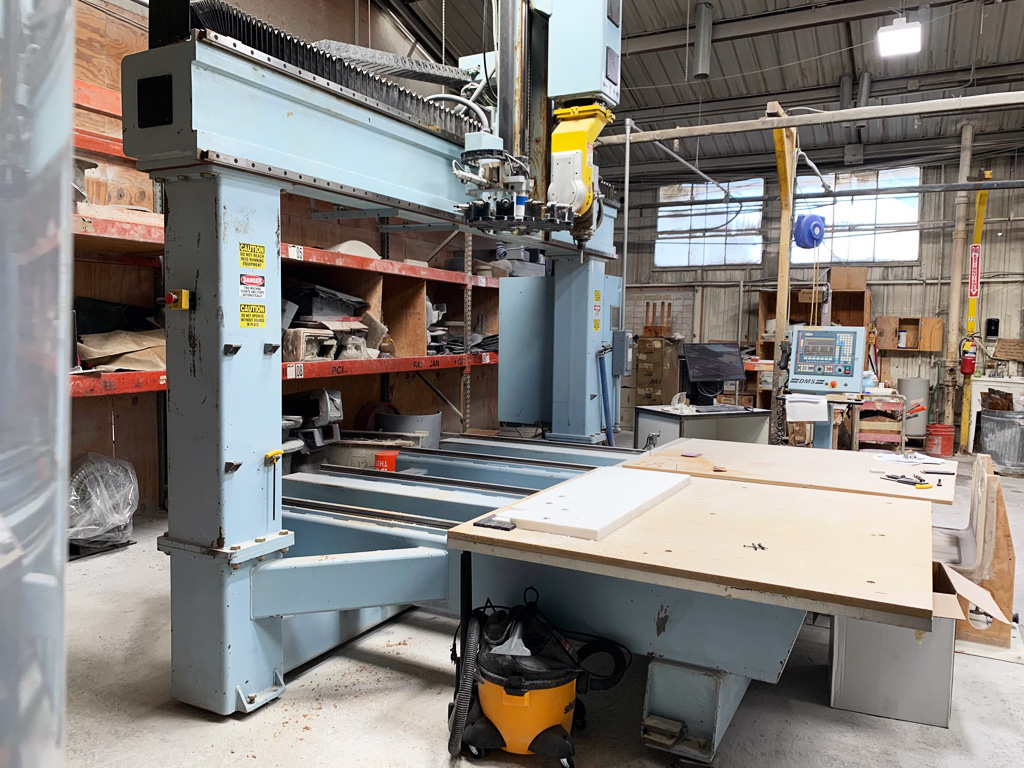
To determine whether loss of accuracy stems from mechanical play or controller feedback, mount a dial indicator securely to the machine frame with the probe resting directly against the spindle or axis carriage. Zero the indicator, command a small incremental jog in one direction (such as +0.010 inches), and then immediately jog the exact same distance in reverse (-0.010 inches). The variance between your programmed command position and the physical indicator reading directly exposes the true physical backlash present in the axis assembly.
Inspect Drive Components
Once backlash is detected, systematically examine key mechanical wear points to locate the exact source of motion loss. Check for ball screw axial end-play and degraded thrust bearing pre-load, which allow non-commanded shaft movement. Inspect rack-and-pinion drive engagement and gear reducer backlash on larger gantry systems, and carefully verify that motor-to-shaft flexible couplings show no signs of cracking, slipping, or structural wear under load.
Need Hands-On Help? Schedule a Diagnostic Visit
If electronic adjustments don’t restore your tolerances, our field technicians can perform complete laser calibration, ballbar testing, and mechanical rebuilds on-site.